
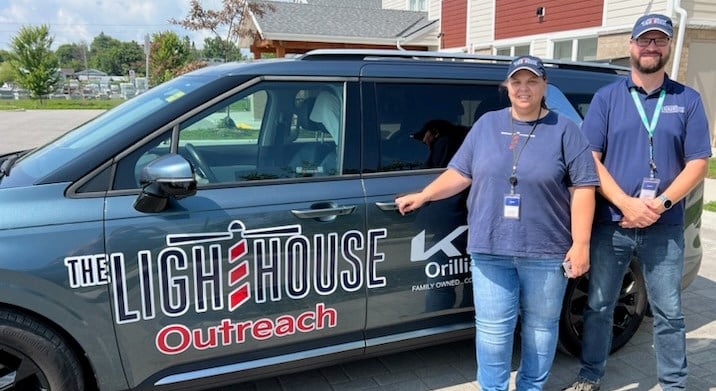
This is the eighth in a series of columns written by staff from The Lighthouse to help the community better understand people experiencing homelessness and those who support them. This column will appear every other Monday. (Click here to read the first column. Click here to read the second column. Click here to read the third column. Click here to read the fourth column. Click here to read the fifth column. Click here to read the sixth column.)
In our last column, we talked about encampments. We also talked about The Lighthouse’s outreach program. They’re closely connected.
As encampments grow and become more visible in our community, we recognize that more support is needed for people who are sleeping rough, in tents, or on the street. The question remains, what does that support look like?
Over the past couple of weeks, we’ve received emails expressing frustration that people are camping on city or private property near community members’ homes because “they shouldn’t be there.” We agree. Everyone should have access to housing.
The reality is that, while housing is the solution to the issue of homelessness, it’s not an immediate solution. It can take time for affordable housing to be built, supports to be put in place, and people to move into housing.
Barriers such as poor credit scores, substance use, not being used to having a home, and low income are all challenges that people may face.
While we look forward to seeing long-term changes and continue to work with community partners to see those changes take place, we know that we need to offer support now. That’s where The Lighthouse’s Outreach comes in.
In a broad overview, outreach workers build relationships, keep people safe and well, and support them to move toward housing. The specifics of this process will be different for each person with whom they interact.
Outreach workers start their day by restocking the vehicle. They take basic necessities such as socks, hygiene items, snacks, tarps, and water to meet immediate needs. Then they head out to connect with people.
The outreach team’s daily circuit has some consistent stops, but it is also directed by needs that have been raised through communication with community members and collaboration with the City of Orillia bylaw officers and the Orillia OPP.
Some of the participants we serve through outreach are people we see regularly. We know where these individuals are staying and will touch base once or twice a week.
Other people we may interact with only once before they figure out somewhere to stay with a friend or family member, come into the shelter if space is available, or move on to another city.
When the outreach workers engage with someone, the primary goal is to support each person in their housing journey. People experiencing homelessness have all kinds of backgrounds, including intergenerational poverty, disabilities, significant education, and mental health and addiction struggles.
Sometimes it requires time to build trust to even have a conversation. Some people have had difficulties navigating the system, don’t feel safe sharing their information with someone they don’t know, or aren’t looking to stay in a congregate living setting like a shelter.
Other people are looking to come into the shelter. If there is space in the emergency shelter and someone is eligible for services, the outreach workers will support them to make their way to The Lighthouse so they can complete the intake process.
If there isn’t an available bed in the shelter, outreach workers will still offer whatever supports they can and connect the individual to the shelter’s triage waiting list. They will also work with the individual to complete the appropriate paperwork for coordinated access (county-wide housing access system), provide information about services in the community and connect people with relevant resources.
Is it dangerous to have people staying in encampments in our community? This question is often raised in conversation.
Safety is a top priority as we do outreach, including safety for staff, for people experiencing homelessness, and for the community. Outreach workers always work in pairs, and they are trained in de-escalation. They don’t wear protective equipment, but instead focus on building rapport that provides a foundation for a working relationship with someone experiencing homelessness.
If there is a safety concern, OPP are called. We seek to ensure safety for the people staying in encampments by helping them move forward to something that is more sustainable long term. We want to see them well, living in places that are safe and not subject to extreme weather. In the meantime, we provide garbage bags to clean up waste and we will work to ensure people have what they need so that they will wake up the next morning.
As we work with people living in encampments in Orillia and the surrounding area, The Lighthouse outreach is not the sole solution to all the issues. As with everything we do, we collaborate with community partners to continuously work on solutions. With outreach we continue to make progress in partnership with Orillia bylaw and the OPP.
If you have a concern about the wellbeing of someone who is staying at an encampment, contact outreach@orillialighthouse.ca. If you have a concern about someone camping on property, contact the City of Orillia bylaw department. At any point, if you have an immediate safety concern for yourself or someone else, contact OPP.
If you have questions or concer about The Lighthouse’s Outreach, contact Executive Director, Dale Rowe at dale@orillialighthouse.ca