
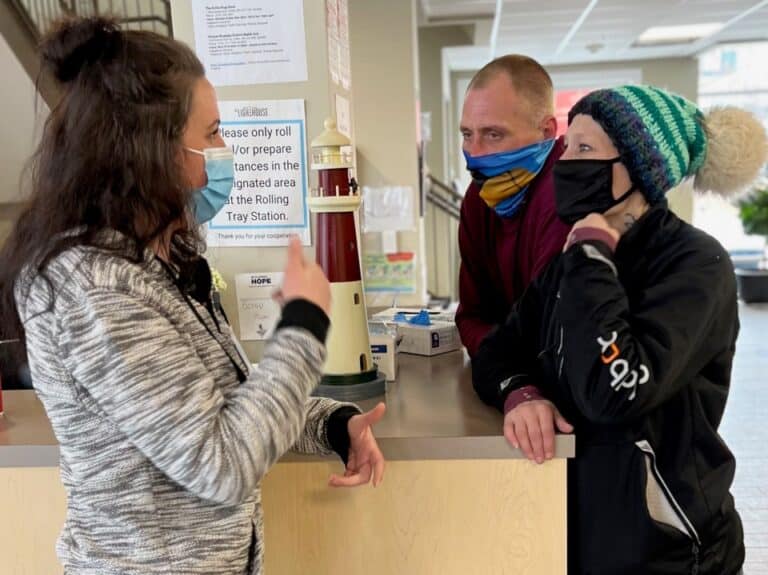
‘The day in the life of a shelter is unexpected, filled with crisis, hope, sadness, support,’ explains executive director
This is the ninth in a series of columns written by staff from The Lighthouse to help the community better understand people experiencing homelessness and those who support them. This column will appear every other Monday.
Imagine going to work. You are a front-line worker in the homelessness sector. You arrive for your shift and sit down at your desk. All of a sudden, there’s a commotion.
Someone with a mental health illness is experiencing psychosis. You immediately jump up from your desk to assist your coworker. Once that crisis is over, you are able to sit with a participant, who shares their life story of trauma and abuse. You don’t know how anyone has lived through that. You encourage them with hope.
Back at your desk, you meet with another participant in a wheelchair who has been at the shelter for months. You have been going through housing listings again and again, and until today there has been nothing affordable. Today, the participant has found housing. They show you the key to their new place. Everyone is ecstatic and filled with joy.
Then you are pulled away with another crisis. This time, you ensure you have Narcan with you as it’s a possible overdose. Staff and participants work together to save this person, who lives with extreme trauma and addictions. Paramedics are called and take them to the hospital to recover.
Near the end of the day, a family experiencing homelessness arrives. It’s the end of your day, but you stay to ensure they are safe in the motel voucher program.
The day in the life of a shelter is unexpected, filled with crisis, hope, sadness, support. No day is the same.
We have all been hearing about the challenges across the country of hiring and retaining staff in organizations over the past few years. The Lighthouse has also experienced these types of difficulties as we serve some of the most vulnerable in our community. While we will not attempt to explain all of the factors that contribute to these challenges in this column, there are some additional challenges due to the type of work we do.
Over the past few years, the Lighthouse has experienced significant growth. You may know the Lighthouse was a 14-bed men’s shelter run by five staff members and a number of volunteers. In 2014, a vision was shared for a new building that would be able to support men, women and youth in 58 emergency shelter beds as well as 20 supportive housing units. Participants first moved into the buildings at 75 Queen St. E. in September 2021. Through the building process, the Lighthouse also experienced a rapid increase in staff.
How many people does it take to operate the Lighthouse?
To offer all of the programs that run out of our community services and supportive housing buildings, we have 61 individuals on staff. This includes our full-time, part-time, and relief team members as shelter workers, maintenance, kitchen, leadership, housing and more.
In addition to paid positions, the Lighthouse relies on more than 100 active volunteers who offer support by sharing their skills, including through working in the kitchen, cleaning, having conversations with participants, running drop-in programs, and completing maintenance projects, among other tasks.
Along with the general challenges in staff retention we see in our nation across all sectors, working in social services adds a layer. This type of work is demanding. It requires staff to consistently support individuals in what may be the most difficult times of their lives.
Staff demonstrate empathy and compassion as they work with participants on housing plans, connect people with resources for health care, respond to overdoses, support people who live with mental illnesses, collaborate to create safety plans, etc. Many people who stay at the Lighthouse have also experienced trauma throughout their lives, and the Lighthouse staff are there for them to hear the stories they want to share and help connect them to relevant resources.
While we celebrate when a participant finds housing, we also grieve when a current or past participant passes away, relapses, or experiences violence or abuse. The mental capacity it takes to offer this support can cause staff to experience compassion fatigue.
As an organization, we strive to care for our staff. Just like the oxygen mask on an airplane, we know we need to have our own ‘oxygen masks’ on before we can care for others.
Promoting the well-being of our staff means we encourage their emotional, physical, relational and spiritual well-being. As a team, we want to ensure there is opportunity to debrief difficult situations. We are thrilled we have recently been able to become a current living-wage organization. We have a benefits program in place for staff to take advantage of, including an employment assistance program.
We encourage staff to build support networks with their friends and families and to unplug from work when they aren’t scheduled in order to be able to return to work rested and ready to care for participants.
Despite the challenges of working in this field, we know there is still hope. The Lighthouse’s vision is “a thriving community where everyone has hope, home and a future.” We want this for our participants. And we want this for our staff and volunteers.
As we work to provide hope for others, we also need to maintain it and build it in ourselves. You can be part of it. If you interact with a front-line worker in the homelessness sector, thank them for the work they do to support some of the most vulnerable individuals in the community. Your encouragement and support of the Lighthouse’s work are vital.
Linda Goodall was the previous executive director at The Lighthouse for further information you can contact Dale Rowe, Executive Director at dale@orillialighthouse.ca