
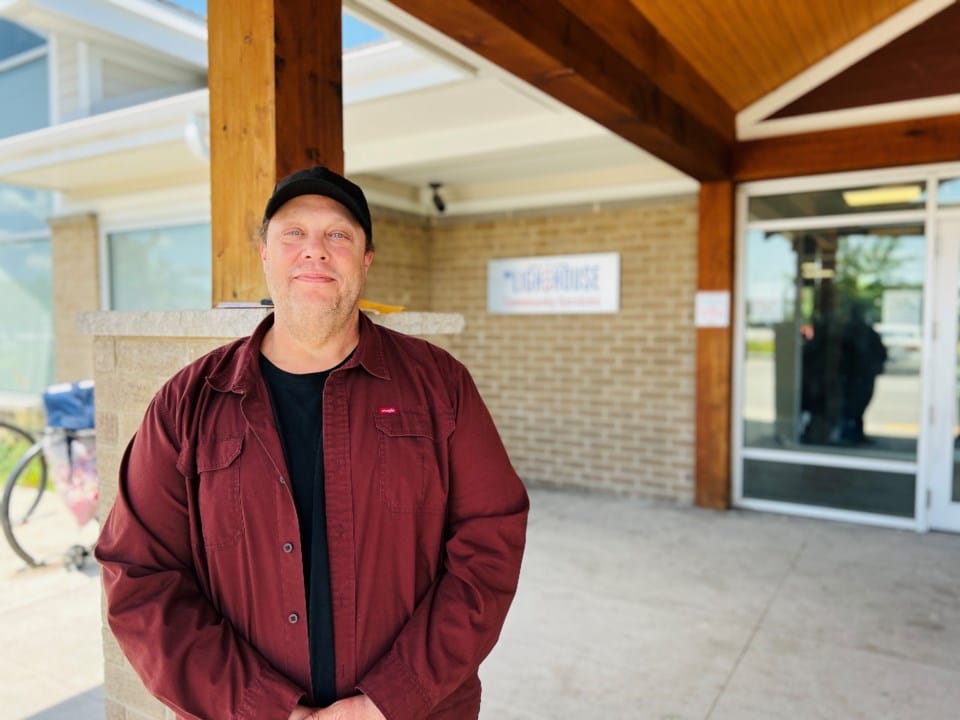
Lighthouse staff ‘told me they believed in me, and that gave me the strength to believe in myself,’ says formerly homeless man on the verge of becoming social service worke
These columns are written by staff from The Lighthouse to help the community better understand people experiencing homelessness and those who support them. This column appears every other Monday.
When John walked through the doors of The Lighthouse, he was overwhelmed and exhausted.
After accepting an early retirement package and being unable to find work, John found himself experiencing homelessness. He had lost his housing, his support system, and his sense of himself. He spent the first few weeks in a fog, often retreating to his car just to breathe and gather the strength to carry on.
“I was just in shock,” he says. “I’d sit in the car scrolling through job postings, thinking, ‘I’m just one of 400 applicants.’ And those weren’t even jobs I wanted.”
Like many who come through the shelter system, John was dealing with the trauma of sudden homelessness, compounded by stigma and isolation.
But it wasn’t just a roof over his head that changed his direction; it was the staff who saw his potential.
“They didn’t break the rules for me,” John says, “but they met me where I was at. That told me they believed in me, and that gave me the strength to believe in myself.”
The Lighthouse staff became a support network John never had. He was offered encouragement, structure, and flexibility, which made space for him to recover, reset, and reimagine his future.
After arriving at The Lighthouse, John enrolled full-time in the social service worker program at Georgian College. Despite battling pneumonia while living in the shelter, John pushed through his studies and landed on the dean’s list twice. The support he received from Georgian College staff, including professors who made accommodations and checked in on his well-being, played a major role in his academic success.
“I fell asleep studying for an exam in a snowstorm, in my car. My professor drove to The Lighthouse, brought the test with him, and I wrote it here. That act of kindness boosted my grade and kept me going,” he says.
John is thankful to Jay Fallis for going over and above to support him.
Through his connections at The Lighthouse and Georgian College, John was invited to take part in Humanities 101 at Lakehead University, a course designed to make post-secondary education more accessible to people facing barriers. He hesitated at first but found himself enjoying it more than he expected.
“It was just a little something to keep my mind engaged,” he says, “but it opened my eyes and it opened doors.”
Now in school full-time and thriving, John is clear about what helped him get here: support, connection, and people who saw beyond his circumstances. But he’s also vocal about the gaps in the system.
“We’re putting Band-Aids on things,” he says. “People leave shelter or detox with no follow-up support. They return to the same environment with no stability. And then we blame them when they relapse.”
His voice grows firmer as he talks about the importance of post-shelter programs and sustainable housing. He has seen peers return from treatment only to fall back into addiction because they had nowhere else to go.
“There needs to be a real plan when someone is ready for change,” he says. “Support on the outside is everything.”
John is now using his lived experience in his placement and course work, quickly gaining a reputation for his ability to connect with participants.
“I know what they’re going through. I’ve been there. When someone talks to you like a person and not a problem, that changes everything,” he says.
He dreams of becoming a professor one day, combining his education and life experience to shape the next generation of social workers. He’s passionate about teaching others to see people for who they are, not for the labels assigned to them.
“We would never call someone ‘cancer,’” he says, “but we say ‘addict’ like it defines them. We need to change that language. We need to understand how people got here, not just judge them for where they are.”
While John is focused on his future, he carries the pain of being separated from his children, who were told a version of his story that didn’t reflect the truth. But he’s holding out hope.
“I know if I ever get the chance to sit in front of them, they’ll see who I really am. They’ll see the full picture,” he says.
He hopes they’ll be at his graduation in December.
In the meantime, John continues to study, volunteer and advocate. He’s determined to be a voice for change, using his story not to dwell on the past but to help shape a better future, for himself and for others.
“If more people in the community could see the full stories, not just the tents or the headlines, they’d understand,” he says. “They’d see there are people like me trying, every day, to move forward, and they’d know that support really does make all the difference.
Rosemary Petersen is the managing director at The Lighthouse and can be reached at rosemary@orillialighthouse.ca.