
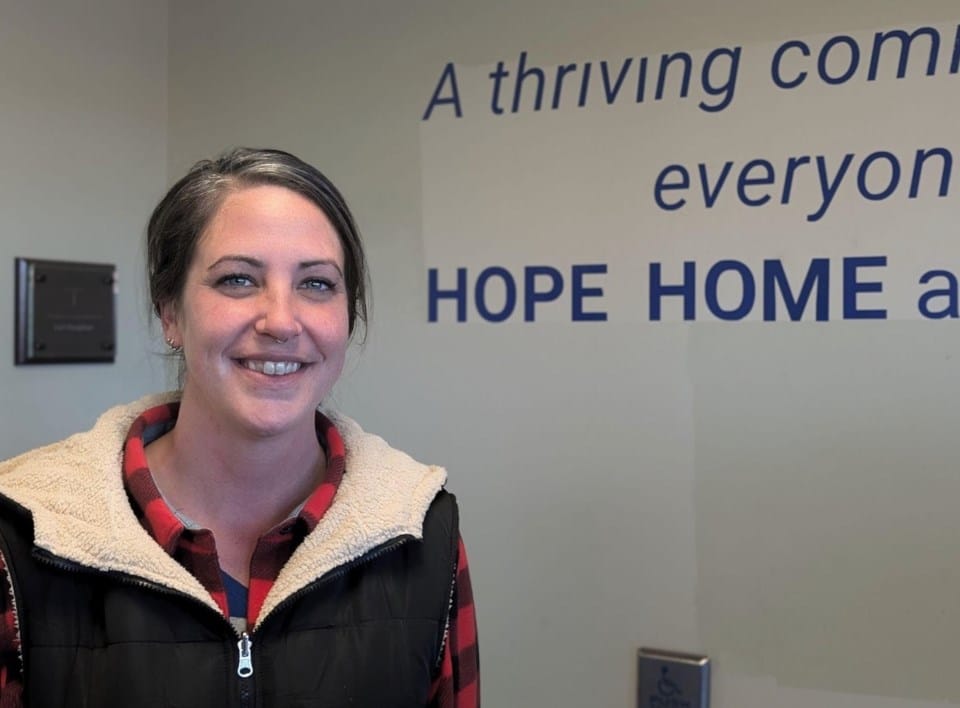
‘The reward is seeing people who come in at the worst moments of their lives be successful and meet their goals,’ says Lighthouse youth housing navigator.
This is the 38th in a series of columns written by staff from The Lighthouse to help the community better understand people experiencing homelessness and those who support them. This column appears every other Monday.
Talk to anyone working in the homelessness sector and they’ll tell you some workdays are difficult.
Homelessness is a series of losses, and people working in this sector witness the challenges people who are experiencing homelessness face on a daily basis. Broken relationships, financial loss, struggles with addiction and substance use, belongings being lost, stolen or having to be given up, and limited rental possibilities are just a few aspects of the difficulties that impact what it means to experience homelessness.
For staff who spend their days serving and caring for people who are living through these challenging situations, continuously witnessing loss can take a toll.
Despite the challenges, The Lighthouse team is made up of about 80 dedicated staff who are committed to providing services to people who are experiencing homelessness in our community. They choose to work in a field that has high rates of burnout and no easy answers to the housing crisis our community and country face. Last week, we sat down with Steph, a front-line housing navigator in The Lighthouse’s youth emergency shelter, to talk about why she works in this sector.
Steph began working in a shelter when she was completing her diploma in addiction recovery for youth and families. She wasn’t sure if this was a field in which she wanted to work, but she soon fell in love with shelter work.
“I get to speak with numerous people every day, getting to know their stories and where they want to be, and then helping them get there,” she says. “The reward is seeing people who come in at the worst moments of their lives be successful and meet their goals.”
Steph’s work at The Lighthouse has allowed her to be involved in a variety of areas. She started as a shelter worker in an overnight role.
“It allowed me to work and go to school at the same time,” she notes.
As part of her schooling, Steph also needed to complete a placement, which she did at The Lighthouse. Through this process, she was able to support the daytime services that are available to shelter participants as well as community members, including the community shower program, bagged lunches and access to technology. When she completed her placement and was asked what was next, Steph emphatically said, “I’m going to permanently work at The Lighthouse.”
She took on the youth housing navigator role and has been supporting youth to achieve their housing goals, helping them navigate resources. She recently accepted a housing support worker role at The Lighthouse’s supportive housing. Steph is looking forward to continuing to grow as she supports individuals in a case management capacity.
The Lighthouse shelters 58 people in the emergency shelter program each night, and during the day, participants work with staff to access the necessary resources that will help them secure housing.
Steph shares that while the work can be hard, “knowing that you have on-site community partners and a team makes the load a little lighter. I have the tools to help participants move forward in the right direction.”
Working in an environment where loss and suffering are part of a normal day requires a strong support system.
“I love having a team and coworkers to lean on because it’s not an easy job,” Steph reflects.
The emotional weight of the work can be heavy, but mutual care and respect among The Lighthouse team provides a vital safety net.
“When you have a strong team, you can tap out and take a break when you need to,” she notes, emphasizing the importance of communication and mutual support. “I can go home at the end of my day knowing that the next shift has it covered.”
In a field full of compassionate people, many staff members struggle to disconnect from work because of how much they care for the people they are serving. To combat burnout, Steph intentionally carves out time for self-care and sets boundaries.
“When I get home, I take 30 minutes to disconnect from work and reconnect at home,” she shares. “It’s a really intentional time for me. Then I can focus on my family and it’s all about them.”
Her home life is a crucial aspect of her self-care.
The Lighthouse’s commitment to supporting vulnerable individuals is rooted in a desire to see people thrive in our community. Homelessness is part of their story, but it doesn’t define them.
“A lot of people don’t see what we see,” Steph says, “but I get to see that everyone is human and they just need support.”
Linda Goodall is the former executive director at The Lighthouse. For further information contact Dale Rowe, Executive Director at dale@orillialighthouse.ca
Rosemary Petersen is the managing director at The Lighthouse and can be reached at rosemary@orillialighthouse.ca.